

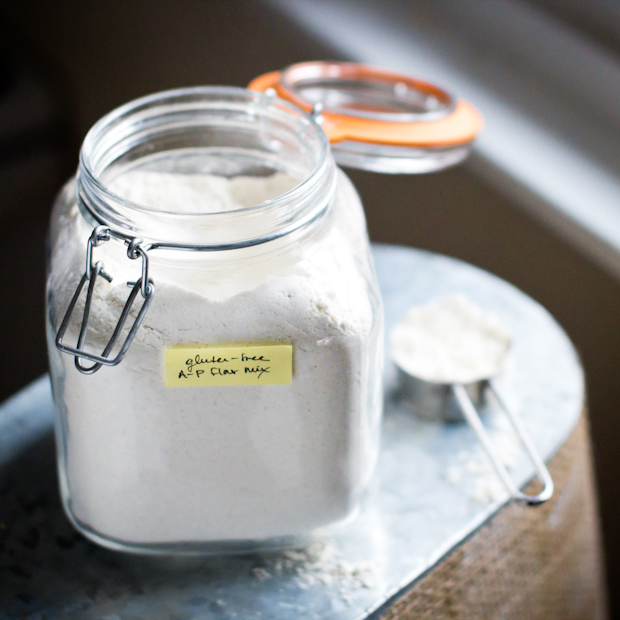
My sister-in-law recently found out that she has to eat gluten-free, and as a fun way to experiment with some new baking techniques and also enable her to be able to, ya know–eat–when she visits, I thought I’d make a gluten-free flour mix for all those recipes out there.
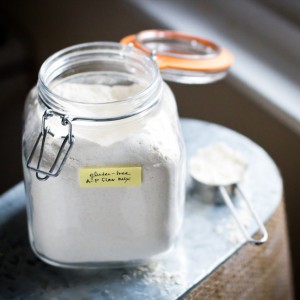
I did not come up with this recipe on my own–I definitely don’t have enough experience baking gluten-free, so I have to depend on those better educated than I. I followed a tutorial from Gluten-Free Girl found here.
Anyway, my mom knew I wanted to try using my new grain mill for some new stuff, so she suggested making a basic flour that I could keep around. And for those of you who want to try making something gluten-free, here’s a good place to start!
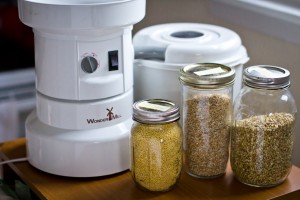
Gluten-Free Girl uses a ratio system–40% whole grain flours and 60% starches, measured by weight. This was my first try, and quite successful so far!
Gluten-Free All-Purpose Flour Mix (ratio from Gluten-Free Girl)
- 200g oat flour (I used certified gluten-free oats because not all oats are GF)
- 100g millet flour
- 100g (raw) buckwheat flour
- 300g potato starch
- 300g tapioca flour
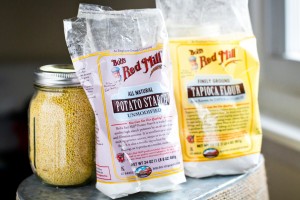
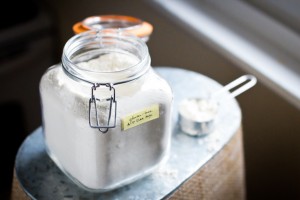
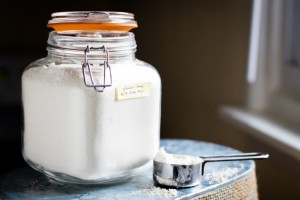
I ground each flour on the “bread” setting of the mill, then dumped them into a canister with the starches and shook ‘em up!
I had almond meal that I wanted to use, and quinoa that I considered grinding, but both are more strongly flavored flours so I decided not to use them for this first batch.
Having done a good amount of research on baking GF, I’ve decided to make my first few attempts “gum-free”, meaning I won’t be using guar or xanthan gum to substitute for the gluten (the “sticky” part of wheat). Seems like they can be tough on sensitive stomachs, and I also…don’t feel like paying $10 for xanthan gum if I don’t really need it.
My first attempt (chocolate chip banana bread) came out awesome–Fritz loved it and said he wouldn’t have known it wasn’t made with regular flour if I hadn’t told him. Once I get a chance to take some pictures of the (half-eaten) loaf, I’ll share it with you.
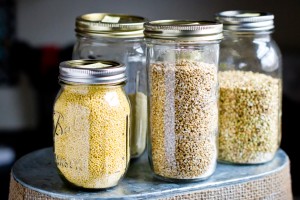
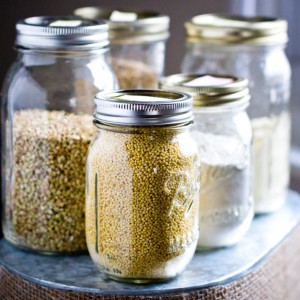
Probably the best part of this grain-grinding process was all the pretty jars I had out.
Enjoy!





7 Responses to Gluten-Free All-Purpose Flour Mix